Herringbone Diamond Tile Star Patterns
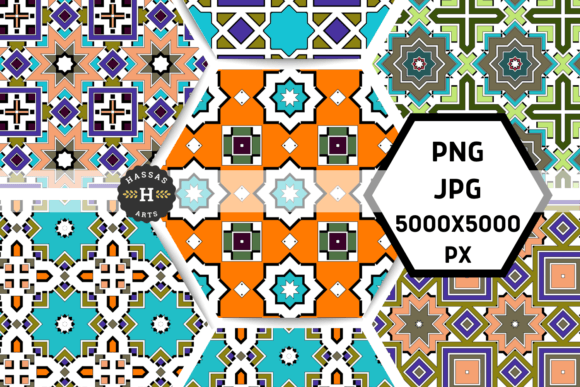
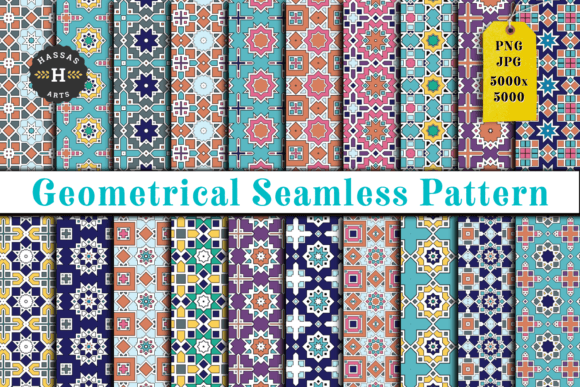
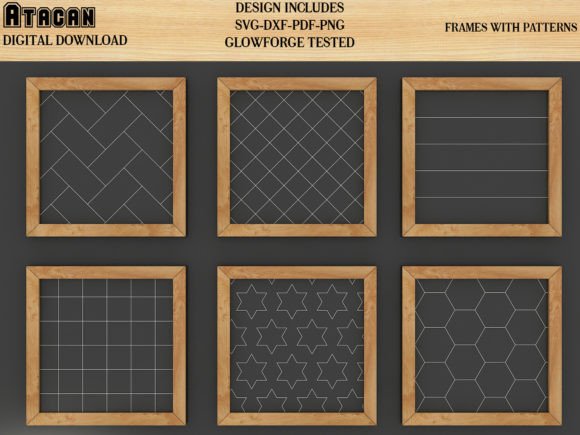
If you’ve ever stared at a blank craft mat wondering how to turn simple shapes into something striking—something that feels both timeless and unexpectedly modern—you’re not alone. Herringbone Diamond Tile Star Patterns are precisely that bridge: geometric, rhythmic, and endlessly adaptable. At first glance, they look like interlocking diamonds arranged in a classic herringbone layout—but zoom in, and you’ll spot subtle star motifs embedded at key intersections. It’s this quiet duality—structure meets sparkle—that makes them so versatile across materials, machines, and intentions.
Where These Patterns Shine in Real Life
These aren’t just decorative files for your design folder—they’re practical tools shaped by real making experiences. A wedding stationer in Portland used the Herringbone Diamond Tile Star Patterns to laser-cut delicate vellum inserts for 120 invitation suites. The herringbone rhythm gave cohesion; the tiny stars added a whisper of celebration—no glitter, no extra steps, just clean, precise cuts on her Glowforge Pro.
Meanwhile, a small-batch ceramicist in Asheville applied the same pattern as a stencil for underglaze transfers. She printed the SVG onto overhead film, then pressed it onto bisqueware before brushing on cobalt blue. The result? A hand-finished tile series with architectural gravitas—yet each piece retained warmth because the pattern wasn’t overly rigid. That balance is built into the design itself: the diamond angles guide the eye, while the star points interrupt repetition just enough to feel intentional, not mechanical.
In classrooms, middle school art teachers use the PDF version to print full-sheet templates for paper-weaving projects. Students cut strips, layer them over the grid, and discover symmetry hands-on—not through diagrams, but through doing. One teacher told us her students started spotting the pattern in brickwork, floor tiles, even quilt blocks around town. That kind of cross-context awareness? That’s when a digital file becomes more than a file—it becomes a lens.
Who Uses These—and Why It Fits So Many Workflows
Crafters with Cricut or Silhouette machines love these patterns because they scale without pixelation—and because the vector paths are optimized for clean blade travel. No jagged corners, no double-cutting surprises. You can run them at 8” x 10” for greeting cards or expand to 24” x 36” for wall decals, and the alignment stays crisp. The DXF files drop right into Cricut Design Space (via import), while Silhouette Studio handles the SVG natively—no conversion headaches.
Laser users beyond Glowforge appreciate the tested compatibility: we verified clean burns on Epilog Zing, Universal Laser Systems, and even older Trotec models. The files avoid nested layers or hidden clipping masks—common culprits behind misfires on non-Glowforge machines. If your machine reads SVG, DXF, PDF, AI, or CDR, these patterns will behave predictably. (We even included JPG reference files—not for cutting, but for quick visual checks when switching between screen and material.)
Paper engineers and packaging designers use the repeating tile logic to prototype box flaps, gift wrap overlays, or modular book covers. Because the pattern tiles seamlessly edge-to-edge, you can mirror or rotate sections without breaking continuity. One designer used it to create a limited-run notebook cover where the herringbone wraps around the spine—stars aligning perfectly across front, back, and fold. That kind of precision saves hours in manual alignment.
What to Keep in Mind Before You Cut or Print
Material matters—more than the file format. Thin cardstock (65–110 lb) cuts beautifully with the star details intact. But if you’re using thick chipboard or balsa wood, consider simplifying the star points slightly in your software—just a 0.5 mm reduction in inner radius keeps kerf from blurring fine geometry. It’s not a flaw in the file; it’s physics meeting intention.
Also: always do a test cut on scrap first—even with Glowforge Pro’s auto-focus. Why? Because surface texture changes everything. A matte black acrylic may absorb laser energy differently than glossy white, shifting how sharply those diamond edges define. The reference JPG helps you spot-check spacing before committing.
And while the patterns tile infinitely, remember that your machine’s bed size sets practical limits. A Cameo 4 handles up to 12” x 12”, so you’ll want to export the SVG at that max size and repeat manually in your software if covering larger surfaces. Not a limitation—just a reminder that flexibility lives in how you combine the file with your process.
Strengths You’ll Notice Right Away
- No licensing surprises: Use these commercially—on products you sell, in client work, even as part of subscription kits. No attribution required, no usage caps.
- Zero “digital-only” friction: The AI and CDR files mean Adobe Illustrator and CorelDRAW users skip conversion entirely. What you see is what cuts—or prints.
- Quiet scalability: Enlarge a single tile to 36”, and the star points stay razor-sharp. Shrink it to 1”, and the herringbone still reads clearly. That’s vector integrity you can trust.
- Cross-platform calm: Whether you’re toggling between Glowforge’s web interface, Inkscape for tweaks, or Brother ScanNCut’s CanvasWorkspace, the core geometry remains stable.
A Few Gentle Realities
These patterns excel at flat, two-dimensional applications—not 3D bending or deep engraving. If you’re planning to wrap them around curved surfaces (like mugs or bottles), you’ll need to distort or map the design separately—this set doesn’t include pre-warped variants. Also, while the stars add visual interest, they do increase cut time slightly versus a plain herringbone grid. For high-volume production, that’s worth noting—but for most makers, the added character far outweighs the extra 8–12 seconds per sheet.
Finally, color isn’t embedded in the vectors—these are pure line art files. That’s intentional. It means you decide whether the stars pop in gold foil, recede in blind deboss, or glow softly under UV ink. The pattern holds space for your choices, not the other way around.
More Than Just Files—A Starting Point
One maker told us she used the Herringbone Diamond Tile Star Patterns as a base layer for a textile design, then overlaid hand-drawn botanical sketches in Procreate. Another turned the star intersections into solder points for a copper wire jewelry series. A third printed the PDF at 200% scale, traced it onto plywood, and carved it by hand with chisels—proving these patterns thrive even outside digital workflows.
That’s the quiet power here: they don’t demand a particular tool or outcome. They offer rhythm, repetition with variation, and a geometry that feels both grounded and elevated. Whether you’re scoring leather, etching glass, folding origami paper, or prototyping packaging—the Herringbone Diamond Tile Star Patterns meet you where you are, and quietly help you go further.