In the Dark Patterns: A Practical Guide to Ethical Design Awareness and Creative Empowerment
“In the Dark Patterns” is more than a striking title—it’s a dual-purpose concept that invites reflection and action. On one hand, it references a well-documented category of manipulative user interface (UI) and user experience (UX) tactics—design choices intentionally engineered to deceive, coerce, or obscure user intent. On the other, it names a distinctive, versatile creative resource: a curated set of high-resolution design assets designed for clarity, flexibility, and ethical reuse. Understanding both meanings deepens our ability to navigate digital spaces thoughtfully—and create within them responsibly.
What Makes These Patterns Distinctive?
The In the Dark Patterns design collection stands apart not because it embraces deception, but precisely because it rejects it. Unlike exploitative dark patterns—such as disguised ads, hidden subscription renewals, or confirm-shaming buttons—this resource embodies transparency, accessibility, and creator autonomy. Each element is crafted with intentionality: no locked layers, no proprietary formats, no usage restrictions beyond standard ethical attribution expectations.
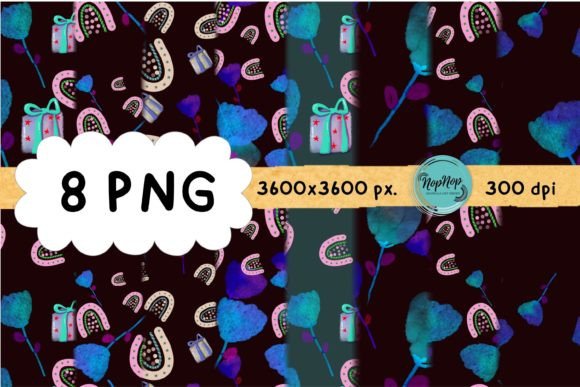
All eight included PNG files are delivered at 300 DPI and sized at 3600 × 3600 pixels (12″ × 12″), making them suitable for both high-fidelity print and crisp digital display. This resolution ensures scalability without pixelation—whether you’re printing an artisanal greeting card on textured paper or exporting a social media banner optimized for Instagram’s square feed.
Real-World Applications Across Disciplines
One of the most valuable traits of this collection is its domain-agnostic utility. Its adaptability stems from deliberate neutrality in visual language: clean lines, balanced negative space, and adaptable tonal ranges that integrate seamlessly into diverse projects.
- Graphic Design & Branding: Use individual motifs as foundational elements in logo variations, patterned backgrounds for business stationery, or subtle textures overlaid on brand guidelines documents.
- Educational Materials: Educators can embed these assets into lesson plans about digital literacy, UX ethics, or visual communication—demonstrating contrast between manipulative interfaces and intentional, human-centered design.
- Web & App Prototyping: Designers working in Figma, Adobe XD, or even pen-and-paper wireframes can import these PNGs as placeholder illustrations, UI accents, or decorative dividers—accelerating early-stage mockups without compromising fidelity.
- Scrapbooking & Analog Craft: Hobbyists appreciate the 12″ × 12″ dimension—it matches standard scrapbook page sizes exactly. Print on matte or metallic paper stock, then cut, layer, or emboss for tactile depth.
- Social Media & Content Creation: Resize and recombine elements to build cohesive visual series—think Instagram carousels explaining cognitive biases, TikTok thumbnails highlighting consent-driven design, or Pinterest pins illustrating accessible color contrast principles.
- Invitations & Personal Projects: From wedding suites to community event flyers, these assets lend sophistication without overwhelming personality. Pair with open-source fonts like Inter or Cormorant Garamond for typographic harmony.
Why Resolution and Format Matter—Beyond Spec Sheets
It’s easy to overlook technical specifications until they become constraints. A 72 DPI file may look acceptable on screen—but when scaled for a 24″ × 36″ poster or embroidered onto fabric, detail collapses. The 300 DPI standard isn’t arbitrary; it’s the industry benchmark for professional offset printing, fine-art reproduction, and archival-quality output.
Likewise, delivering all assets as PNG—not JPEG, SVG, or PSD—strikes a pragmatic balance. PNG preserves full alpha transparency (enabling seamless overlays), supports lossless compression (no generational quality loss during edits), and opens reliably across platforms—from Apple Pages to LibreOffice Draw to Canva. No plugin required. No license key needed. Just drag, drop, and iterate.
Integrating Into Existing Workflows
Adoption requires minimal friction. Whether you use desktop software like Affinity Designer or cloud-based tools like Google Slides, integration follows predictable logic:
- Import: Drag any PNG directly into your canvas or asset library.
- Adjust: Resize non-destructively (maintaining aspect ratio), recolor using blend modes or hue/saturation layers, or mask portions for custom cropping.
- Combine: Layer multiple patterns with varying opacities to build dimensional textures—or isolate single elements to serve as minimalist icons.
- Export: Save final compositions in format-appropriate resolutions: PNG for web, PDF/X-4 for print, or GIF if animating transitions between pattern states.
This interoperability supports iterative learning. A student testing layout hierarchies can swap patterns mid-session. A nonprofit designer building multilingual outreach materials can reuse core visuals across language variants without redesigning from scratch. A researcher documenting interface evolution might annotate versions of the same pattern to illustrate shifts in visual rhetoric over time.
Design Ethics as a Creative Catalyst
There’s a quiet synergy between studying manipulative dark patterns and using resources named after them. Recognizing deceptive UI—like fake urgency timers, buried opt-outs, or misaligned visual hierarchy—sharpens visual literacy. That awareness informs how we select, combine, and contextualize design assets.
For instance, placing a bold “YES” button next to a muted, grayed-out “NO” option mirrors real-world dark patterns. But when using In the Dark Patterns assets, you control context entirely. You decide whether symmetry reinforces choice or repetition induces calm. You choose whether contrast guides attention—or invites contemplation. In doing so, you practice ethical design not as abstract theory, but as daily craft.
This aligns with growing institutional emphasis on responsible AI and inclusive design. Universities now embed UX ethics modules in computer science curricula. Government agencies reference WCAG 2.2 standards in procurement policies. Even small-business owners increasingly understand that trust—not just traffic—drives long-term engagement. Tools that support that shift, without demanding technical overhead, fill a critical gap.
Accessibility Considerations in Practice
While the assets themselves are visual, their implementation impacts accessibility. Here’s how thoughtful usage extends inclusion:
- Color Contrast: When overlaying text on patterned areas, verify foreground/background contrast ratios meet WCAG AA standards (4.5:1 for normal text). Most editors include built-in contrast checkers—or use free tools like WebAIM’s Contrast Checker.
- Alt Text Descriptions: If publishing digitally, describe the pattern’s function—not just appearance. Instead of “geometric black-and-white motif,” write “subtle background texture used to separate content sections visually.”
- Print Alternatives: For tactile learners or low-vision audiences, consider pairing printed patterns with raised-line illustrations or Braille labels where appropriate.
- Animation Caution: Avoid rapid flashing or strobing effects when animating these assets—adhering to WCAG’s 3-per-second seizure threshold.
Who Benefits—and How?
The versatility of In the Dark Patterns means value accrues differently across roles:
Freelance designers reduce time spent sourcing royalty-free textures, allowing focus on client strategy and storytelling. Classroom teachers gain ready-to-use visuals for lessons on media manipulation—turning abstract concepts into tangible discussion prompts. Community organizers produce bilingual flyers faster, maintaining visual consistency across neighborhoods with varying tech access. Researchers illustrate methodological frameworks—say, mapping behavioral nudges across platforms—using consistent symbology. Even developers benefit: embedding these assets into Storybook documentation helps clarify component usage patterns for cross-functional teams.
Notably, no specialized training is required. A middle-school art club can collage printed sheets into zines; a university HCI lab can digitize them for eye-tracking studies on visual salience. The barrier to entry remains low—while the ceiling for innovation stays high.
Toward Intentional Creation
Ultimately, In the Dark Patterns serves as both artifact and invitation. As an artifact, it delivers production-ready assets grounded in technical rigor. As an invitation, it encourages pause: What assumptions shape our design decisions? Whose needs do we center—or overlook? How do visual choices reinforce or challenge power dynamics in information ecosystems?
You don’t need to build complex systems to contribute meaningfully. Sometimes, empowerment begins with selecting a single pattern—resizing it thoughtfully, pairing it with legible type, and sharing it where it clarifies rather than confuses. That act, repeated across thousands of projects, reshapes digital culture from the ground up.
Thank you 🙏.