Tribal Seamless Patterns
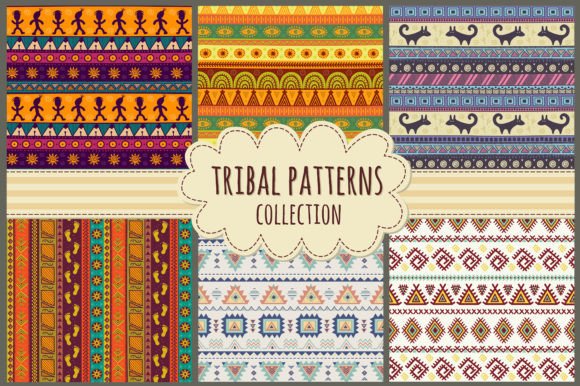
If you’ve ever stared at a blank design canvas wondering how to add warmth, authenticity, or cultural resonance without falling into cliché—Tribal Seamless Patterns might be exactly what your project needs. This isn’t about generic “ethnic” clipart or overused motifs lifted from stock libraries. It’s a thoughtfully curated set of six hand-drawn patterns, each built to tile smoothly across any surface—no visible seams, no awkward repeats, no pixelated edges.
What makes these patterns work so well in real life? They’re drawn with intention—not just visual rhythm, but cultural sensitivity and tactile honesty. Lines have subtle variation. Shapes echo traditional textile structures—like Adinkra symbols, West African mudcloth geometry, or Indigenous dotwork—but reinterpreted for modern versatility. That balance is why designers reach for them when they need something that feels grounded, not generic.
Where These Patterns Actually Get Used (and Why They Stick)
Think about the last time you bought a notebook with a bold printed cover—or noticed the fabric on a café pillow that made you pause mid-sip. Those details matter because they shape mood, signal values, and quietly communicate identity. Tribal Seamless Patterns show up where attention is earned, not demanded.
A small-batch candle maker in Portland uses one of the patterns as a background for her soy wax labels—not full-coverage, but subtly embossed behind her logo. It adds texture without competing, and customers consistently mention how “thoughtful” and “handmade-feeling” the packaging looks—even though it’s printed commercially.
A wedding stationery designer in Austin layers another pattern beneath watercolor florals for invitation suites. Because the repeat is seamless and high-res (5556×5556 px at 400dpi), it holds up beautifully when scaled across oversized envelopes, belly bands, and digital RSVP cards. No stretching. No blurring. Just consistent, confident presence.
Teachers building classroom resources use them too—not for “cultural lessons” as decoration, but as respectful visual anchors in printable posters, reading logs, or behavior charts. The patterns don’t carry specific sacred meaning, but their organic flow and balanced asymmetry feel calming, inclusive, and human-made—not algorithmically generated.
Real Workflows, Real Formats
You’ll get EPS10 and AI files—not just for print shops, but for designers who need editable vectors to tweak scale, recolor, or isolate elements. Need to pull a single motif to use as a monogram? Adjust spacing for a narrow scarf repeat? Swap out a hue to match brand guidelines? That’s all possible without losing fidelity.
The six JPEG files (also 5556×5556 px, 400dpi) serve a different purpose: quick drag-and-drop into Canva, Adobe Express, or even PowerPoint. A blogger designing an Instagram carousel about mindful living drops one pattern behind a quote graphic—it loads fast, prints crisp, and reads as intentional, not clipart-y. A merch seller prepping a limited-run tote bag uploads the JPEG straight to their print-on-demand dashboard. No conversion headaches. No guessing whether the tile will break.
Who Benefits—and How It Changes Their Day
- Freelance designers pitch faster. Instead of spending hours building a custom repeat from scratch—or worse, settling for low-res downloads—they drop in a Tribal Seamless Pattern, adjust color, and send mockups by lunchtime.
- Small business owners avoid licensing risks. These are original, hand-drawn assets—not scraped from Pinterest or misattributed cultural motifs. That peace of mind matters when you’re selling apparel or home goods online.
- Educators and content creators get visual consistency across lesson plans, slide decks, and handouts—without needing design training. One pattern becomes their “branding thread,” tying materials together without shouting for attention.
- Hobbyists and crafters find joy in tangible making: printing on fabric for quilt blocks, cutting vinyl for custom napkin sets, or layering onto scrapbook pages where texture supports storytelling—not distracts from it.
What to Consider Before You Use Them
Seamless doesn’t mean “set and forget.” Even beautiful patterns need context. Ask yourself:
- What’s the dominant material? A dense, high-contrast pattern may overwhelm delicate silk scarves but sing on sturdy cotton tea towels. Preview at actual size—on screen and, if possible, printed small first.
- What’s the message—not just the look? Tribal Seamless Patterns honor craft traditions without appropriating symbolism. Still, pair them thoughtfully: alongside photography that reflects real people, typography that breathes, copy that centers experience over exoticism.
- How much “noise” does the layout already have? If your greeting card includes layered foil stamping, embossing, and handwritten calligraphy, a quieter pattern (with more negative space or softer line weight) often balances better than a busier one.
Also worth noting: these aren’t “one-size-fits-all ethnic” patterns. Each of the six has its own rhythm—some lean geometric and precise, others fluid and gestural. One works like a subtle watermark behind text; another commands attention as a bold wallpaper or fashion print. Take time to scroll through them slowly. See which ones make your cursor pause—not because they’re loud, but because they feel *right* for what you’re making.
More Than Backgrounds—They’re Design Partners
We don’t talk enough about how patterns influence behavior. A napkin with a gentle tribal repeat slows down a meal. A journal cover with rhythmic line work invites reflection before the first sentence is written. A children’s book endpaper using one of these patterns gives young eyes a quiet place to land—repetition that soothes, not saturates.
That’s the quiet power of Tribal Seamless Patterns: they support intention instead of stealing it. They’re not the star of your design—but they’re often the reason it feels complete.
Whether you’re printing 50 wedding napkins or building a Shopify store’s entire visual language, these six hand-drawn patterns give you room to breathe, room to adapt, and room to mean something—without saying a word.